
Dumpster Diving: A Night of Discovery, Waste, and Unexpected Treasures
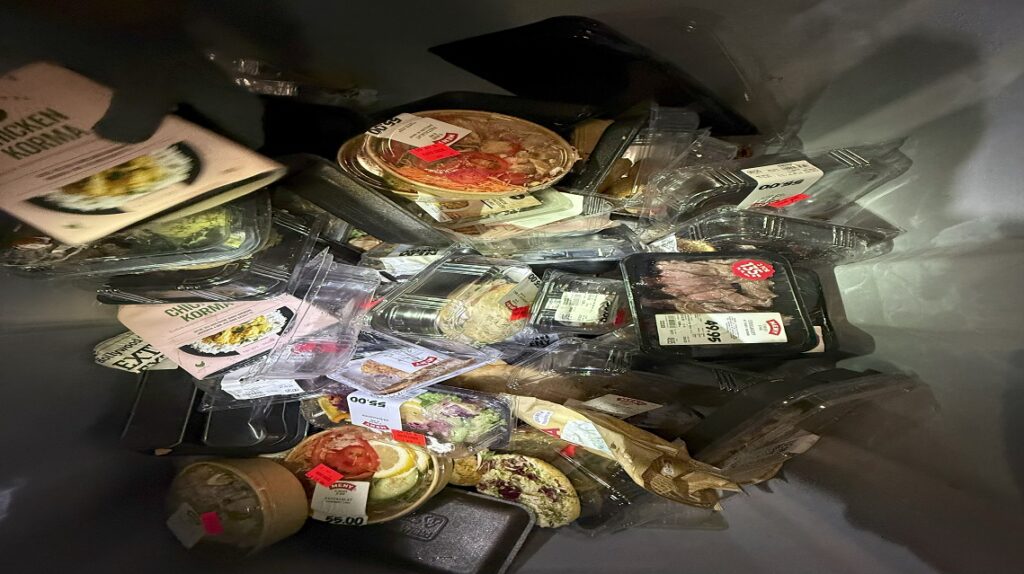
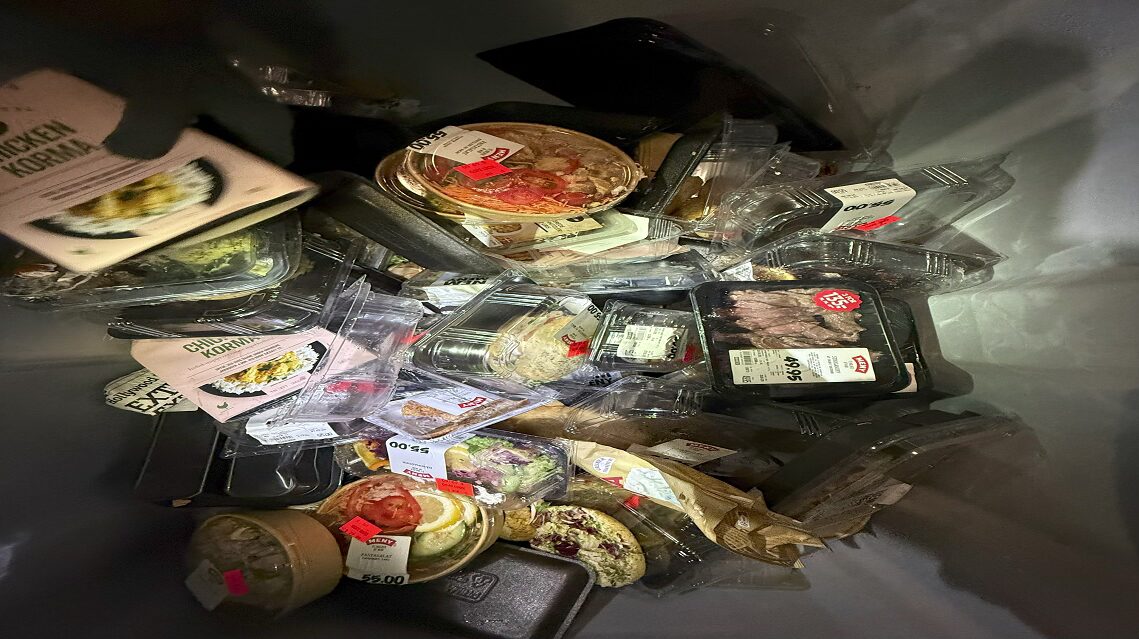

Seeing Food Waste Firsthand
06.02.2025 | By Joana Pechirra
Food waste is a massive global issue, yet most of us don’t see the scale of the problem firsthand. We read about statistics and hear shocking figures, but the reality remains hidden behind supermarket doors.
Wanting to experience this issue directly, a group of us at DRH Lindersvold decided to take matters into our own hands—by going dumpster diving.
What we found, how we felt, and what we learned might surprise you. The experience was not just about finding food but about confronting the reality of waste and questioning the sustainability of our current consumption habits.
The Plan : WHERE AND WHEN
On the 29th of January, a group of us—Tommaso, Joana, Martina, Nicole, Idelma, Célia, Claudia A, and Karola—along with our teacher Gert, set off on a late-night adventure.
We chose supermarkets in Faxe and Rønnede, including Meny, Rema 1000, and Netto, as these areas have a high concentration of grocery stores. The timing was strategic—we went at 10 pm, right after the stores had closed, as that’s when food is typically discarded.
This ensured that we had access to the latest discarded items, minimising the risk of encountering older or unusable products. We also wanted to avoid any conflicts with store employees or security, as some places have strict policies against dumpster diving.
THE DIVE : WHAT WE FOUND
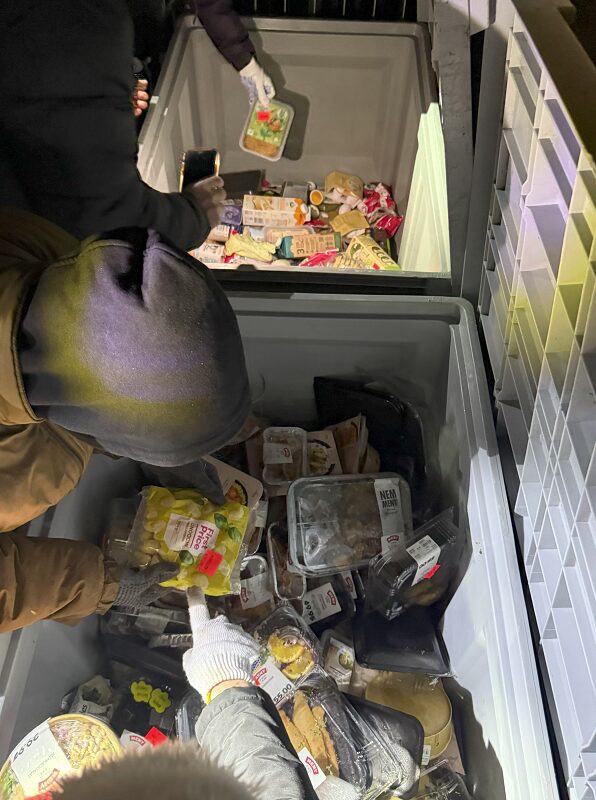
Approaching the dumpsters, we weren’t sure what to expect. Would there be anything at all? Would we find edible food? The answer was astonishing. We uncovered a bounty worth around €85, including a surprising amount of fresh produce and packaged goods—items that were still in good condition but had been deemed unsellable.
There were also large quantities of Jerusalem artichokes, a vegetable some of us had never even heard of before. The excitement of finding so much edible food was quickly overshadowed by the realisation of just how much supermarkets discard daily.
The sheer amount of waste made us wonder about the policies that lead to such extensive food disposal and how much of it could have been redistributed rather than thrown away.
THE AFTERMATH : WHAT HAPPENS NEXT?
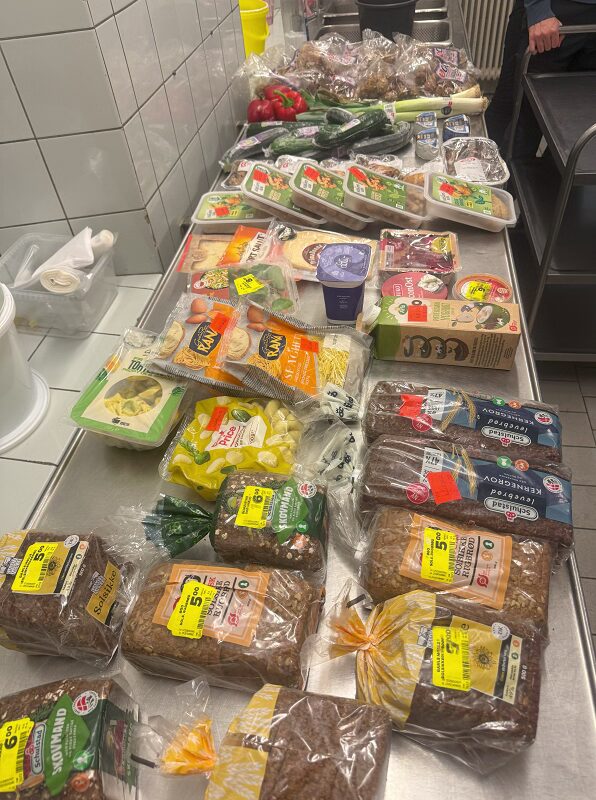
Once we returned to DRH Lindersvold, the real work began. We cleaned the food thoroughly and stored it in a small fridge in the cafeteria, as hygiene regulations prevent us from using the main kitchen.
Over the following days, we used these ingredients to cook dinners for the group—though lunch remained the responsibility of our chef, Belinda. Cooking with the retrieved food added an element of creativity, as we had to work with whatever we found.
It also encouraged us to be more resourceful and appreciative of every ingredient, rather than taking food availability for granted.
REFLECTIONS: THE EMOTIONAL IMPACT
For some, this was a first-time experience, while others had done it before. Either way, it stirred mixed emotions. The thrill of finding so much food was immediately followed by the shocking realisation of just how much waste occurs on a daily basis.
In fact, we often say it’s a good thing when we find nothing—that would mean less food is being thrown away. However, the fact that we always find something speaks volumes about the inefficiencies in our food supply chain.
The experience made us question not only supermarket practices but also our own habits as consumers—how often do we let food go bad at home? How often do we buy more than we actually need?
WHY DOES SO MUCH FOOD GET THROWN AWAY?
From what we saw, food is discarded mainly because it has passed its expiration date, despite still being perfectly edible. Sometimes, it’s simply due to damaged packaging.
On occasion, we even find products that haven’t expired at all—left to mystery as to why they were tossed out. The reality is that food labelling can be misleading; many consumers don’t realise that ‘best before’ dates indicate quality rather than safety.
Additionally, supermarkets prioritise aesthetics—misshapen fruits and vegetables are often discarded even though they are just as nutritious and flavourful as their more uniform counterparts.
THE BIGGER PICTURE: HOW CAN WE REDUCE FOOD WASTE?
Supermarkets and consumers alike can take steps to reduce food waste. Some ideas include:
- Discounting products nearing expiry to encourage purchase.
- Placing short-dated food in more visible locations on shelves.
- Creating low-cost “expiry bundles” to sell at a discount.
- Collaborating with organisations fighting food waste, such as Too Good To Go.
- Educating consumers on food expiration dates and how food remains safe past its ‘best before’ date.
A FINAL THOUGHT
This experience opened our eyes to the shocking reality of food waste, and we hope it inspires others to be more mindful of their food consumption. The lesson goes beyond just retrieving discarded items—it’s about shifting our mindset towards a more sustainable and responsible way of living.
Would you ever consider going dumpster diving? What are your thoughts on reducing food waste?
What is Volunteer for Change
The Volunteer for Change programme is based on two concepts: Sustainable development and international solidarity.
The programme lasts ten months and is an opportunity to learn about the big issues of our time – and to do something about them in practical terms.
The Volunteer for Change programme provides an opportunity for people from the Global North to learn from, and volunteer with, community-driven development programmes in the Global South run by members of Humana People to People. These projects respond to challenges within the spheres of community development, education, sustainable farming, early childhood development and mitigation of the climate crisis.
The fast-paced and action-based Volunteer for Change programme takes ten months:
3 months of training and preparation in Denmark
6 months of assisting a sustainable development programme at a Humana People to people project in the Global South
1 month of reflection, evaluation, and sharing of experiences.
DRH Lindersvold – The Travelling School for Change – welcomes everyone who is interested in working together with us to address humanitarian and development challenges worldwide.
Let’s create a better world together.
Would you like to know more?
Learn more about our programmes

Book a free consultation
Considering volunteering with us or have a lot of questions? We offer a commitment-free one-on-one consultation to help you find out if one of our volunteer-training programmes is something for you.