
Empowering Zambian youth


Empowering Zambian Youth
Celebrating World Youth Skills Day at a grassroots level. An insightful interview with Natalia from Colombia and Victoria from Argentina.
22.07.2024 | By Lyndsay Jensen | Pictures: DRH Lindersvold
World Youth Skills Day, celebrated in July, highlights the importance of equipping young people with skills for employment, decent work, and entrepreneurship. This global recognition focuses on the potential of youth skill development in supporting sustainable growth. As part of this celebration, we had the opportunity to speak with Natalia and Victoria, two dedicated Volunteer For Change students working at the Young Farmers Club in Zambia.
Q: Can you share more about what you’re doing in the Young Farmers Club project?
Natalia: The key aspect of our initiative is community engagement and practical training. In garden farming, we support Isaac, our project leader, while he guides communities in land preparation, manure production, and seed cultivation. We also provide hands-on support in the community garden, demonstrating effective farming methods. For the Savings Club, I focus on teaching record-keeping and financial management. This club encourages members to save money and also offers loans to those who want to invest the money in livestock, seeds or to cover a need from the family.
Q: What are the practicalities of your day-to-day tasks?
Natalia: My day starts pretty early, and I tackle chores like collecting water for the bathroom and kitchen. This is a priority due to the inconsistent provision of water and electricity. I engage in morning exercises, which help me to keep my mind and body balanced. I have breakfast and then head to the office to plan weekly activities – this can vary depending on the plans. Our daily tasks include community meetings to support the clubs, and, in the Savings Clubs, we assist them in tallying up money as well as any agricultural support they need. Lunch is sometimes shared with the community, and afternoons are spent on garden maintenance or other community support activities. Evenings are quieter, allowing time for reading and relaxation.
Q: How has the drought affected the projects you’re working on?
Natalia: The drought has significantly impacted the electricity supply, which in turn affects the local community’s ability to process crops like peanuts and sunflowers to create butter or oil. Water scarcity for crops is another major issue. However, our project supports farmers in developing strategies to cope with drought conditions, ensuring they have the resources and knowledge to cope with these challenges.

Q: Are you getting to know the people in the communities, and can you share some stories?
Victoria: We have formed close connections with community members. One memorable experience was spending a Saturday with women from an area called Musopelo C. They warmly welcomed us, shared their customs, and involved us in their daily activities. We helped prepare lunch, made games with the children, and learned about their gardening techniques. This day highlighted the community’s deep hospitality and vibrant culture, making us feel incredibly grateful and connected.
Q: Can you share a bit about the background of the young farmers you’re working with?
Victoria: In these communities, men typically own the land and have multiple wives who manage the household and agricultural tasks. Women, often marrying young, work the land provided by their husbands. If a husband passes away, his brothers inherit his land, and the wives do not remarry. Livestock ownership indicates wealth and social status, with animals being reserved for special occasions. Communication is diverse, with languages like Bemba, Nyanja, Tonga, and Lozi prevalent. Despite language barriers, the community’s kindness and willingness to cooperate make our work fulfilling and effective.
Through their collective efforts of working both with the local communities and DAPP Zambia, Natalia and Victoria are an integral part of the spirit of World Youth Skills Day, proving once again how skill development and community engagement drive sustainable agricultural practices and support communities in Zambia.
If you could see yourself joining the Volunteer for Change programme in the future, we encourage you to book a call with one of our enrolment advisors to start your journey today! Our next team will begin on the 7th of October, 2024.
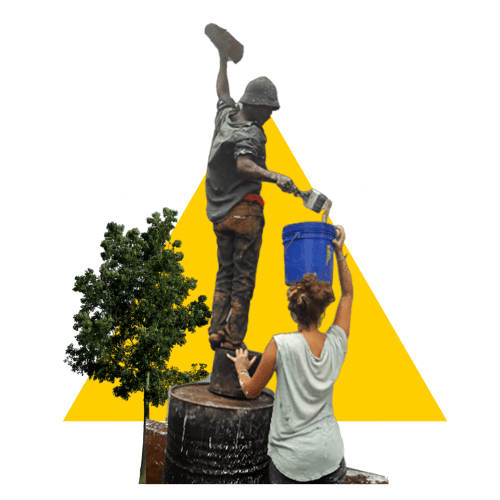
What is Volunteer for Change
The Volunteer for Change programme is based on two concepts: Sustainable development and international solidarity.
The programme lasts ten months and is an opportunity to learn about the big issues of our time – and to do something about them in practical terms.
The Volunteer for Change programme provides an opportunity for people from the Global North to learn from, and volunteer with, community-driven development programmes in the Global South run by members of Humana People to People. These projects respond to challenges within the spheres of community development, education, sustainable farming, early childhood development and mitigation of the climate crisis.
The fast-paced and action-based Volunteer for Change programme takes ten months:
3 months of training and preparation in Denmark
6 months of assisting a sustainable development programme at a Humana People to people project in the Global South
1 month of reflection, evaluation, and sharing of experiences.
DRH Lindersvold – The Travelling School for Change – welcomes everyone who is interested in working together with us to address humanitarian and development challenges worldwide.
Let’s create a better world together.
Would you like to know more?
Learn more about our programmes

Book a free consultation
Considering volunteering with us or have a lot of questions? We offer a commitment-free one-on-one consultation to help you find out if one of our volunteer-training programmes is something for you.

IMG-20231012-WA0005

IMG-20231013-WA0007

IMG-20231014-WA0001
IMG-20240318-WA0008
IMG-20240321-WA0003

IMG-20240321-WA0009
