Our First Month in Guinea-Bissau: Learning, Teaching and Adapting
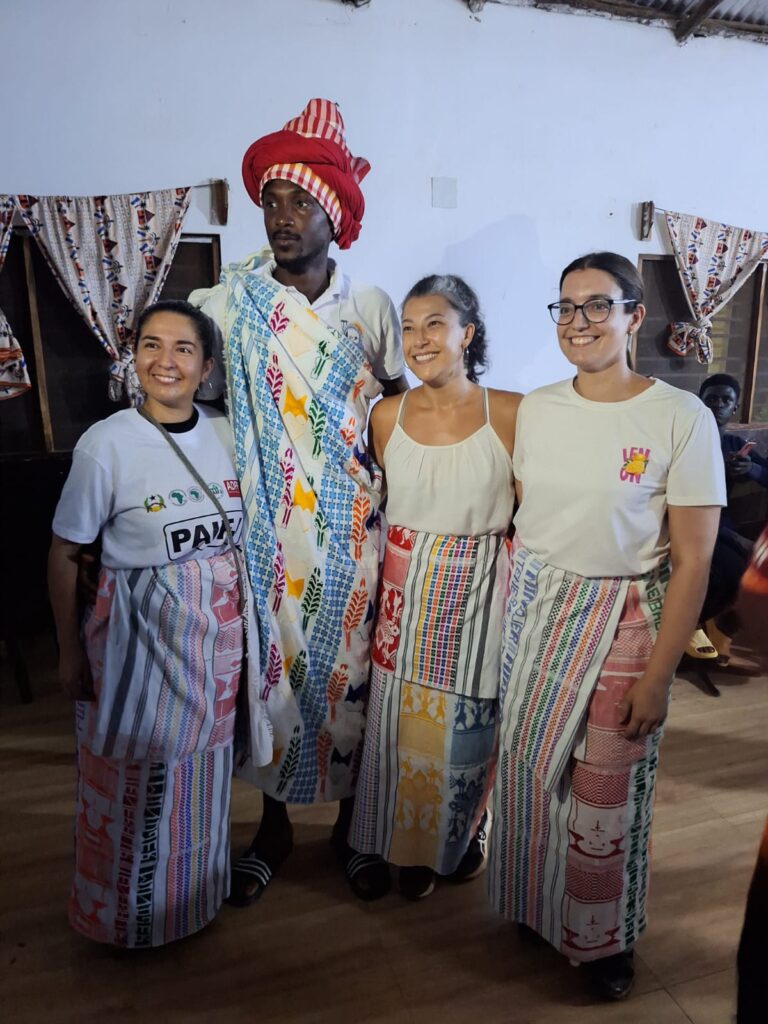
Andreia, Cris and Barbara
Getting Started
Our volunteering journey in Guinea-Bissau began with Yenny arriving one week before the rest of the team. During that time, she visited ADPP and had the opportunity to explore Bissau and become familiar with the local environment. The following week, Andreia and Barbara arrived, and together we returned to ADPP, attended a presentation on gender equality at APICA, and continued discovering the city.
On 13 April 2026, we travelled to Bissorã, where we met the school director, Djoncom, and moved into our new home. The first days were dedicated to getting to know the school, meeting local authorities, and registering students for our language courses.
Our Roles at the School
Each of us supports a different area of the vocational school.
Barbara works with the Agriculture and Climate Resilience course, assisting teachers and teaching fruit-growing techniques during both theoretical and practical lessons.
Yenny supports the IT course, teaching typing skills and Spanish classes.
Andreia works alongside the Portuguese teacher, focusing on phonetics while also teaching English classes.
In addition to our individual responsibilities, we all work together to maintain and organize the school’s library.
Education is at the heart of our project. We believe that learning provides opportunities for personal growth and can contribute to positive changes not only in students’ lives but also within the wider community.
Learning About the School and Community
During our second week in Bissorã, we visited four schools in the region and began one of our biggest tasks: cleaning, organizing, and creating an inventory of the library. At the same time, we started attending lessons to better understand the courses and the students.
By the third week, we had begun teaching some of our own classes while continuing our work in the library. It has been exciting to gradually become part of the school’s daily life and take on more responsibilities.
Adapting to Life in Guinea-Bissau
One of the most rewarding parts of this experience has been learning Kriol. Although we are still beginners, we can already greet people, ask simple questions, understand parts of conversations, and manage everyday activities such as going to the market on our own. Speaking even a little Kriol has helped us connect more closely with the local community.
The teachers and students have been incredibly welcoming, creating a friendly and supportive environment that has made our adaptation much easier.
Of course, not everything has been without challenges. When preparing our lessons, we quickly realized that the school did not yet have internet access available for us. Although equipment had already been purchased, it had not arrived. We discovered that the APICA office, located on the school grounds, had internet access, but initially we were told it would not be possible to use it.
Rather than giving up, we spoke directly with the APICA staff and explained our situation. They kindly offered us access to both their internet connection and a nearby room where the signal was stronger. Since then, we have been able to use their facilities whenever we need internet for lesson planning and project work.
Adjusting to Our New Home
Life at home also required some adaptation. We had to learn how to collect water from the well, cook our own meals, and take care of the house.
During our first week, the stove was not working, so we relied on a small burner for cooking. We also had an unexpected lesson in managing solar energy. On our first night, we left the refrigerator running, unaware of how much power it consumed. The battery drained completely, leaving us without fans during the night while the alarm system sounded continuously.
After a few days of trial and error, we learned how to manage the solar system more efficiently by using the refrigerator only during the day and adapting to sleeping without fans. Thankfully, the stove has since been repaired, making daily life much easier.
To support one another, we hold weekly meetings every Sunday. These meetings give us space to discuss household responsibilities, school activities, challenges, and personal experiences. They have become an important part of maintaining good communication and teamwork.
Looking Ahead
As we continue settling into our roles, we are excited about the plans we have for the coming months.
For our Bissau International Team Project (BITP), we are currently developing the idea of creating both a booklet and a short documentary titled “Building the Future: Vocational Skills in Action.”
The project will explore the history and impact of the vocational school, highlighting the importance of technical education in Guinea-Bissau. Through interviews and personal stories, students will share their daily realities, the challenges they face, and their dreams for the future.
Our goal is to raise awareness—particularly among European audiences—about how practical, skills-based education can contribute to reducing poverty and creating opportunities. Most importantly, we hope to present a human perspective on the young people of Guinea-Bissau, focusing on their determination, resilience, and aspirations rather than simply statistics.
After our first month, we already feel that this experience is teaching us as much as we hope to teach others. We look forward to continuing to learn, contribute, and grow alongside the students and community in Bissorã.
Take the next step
If you’re inspired by our journey and want to make a real difference, consider joining the Volunteer for Change Programme.