
The stigma of albinism
The stigma of albinism
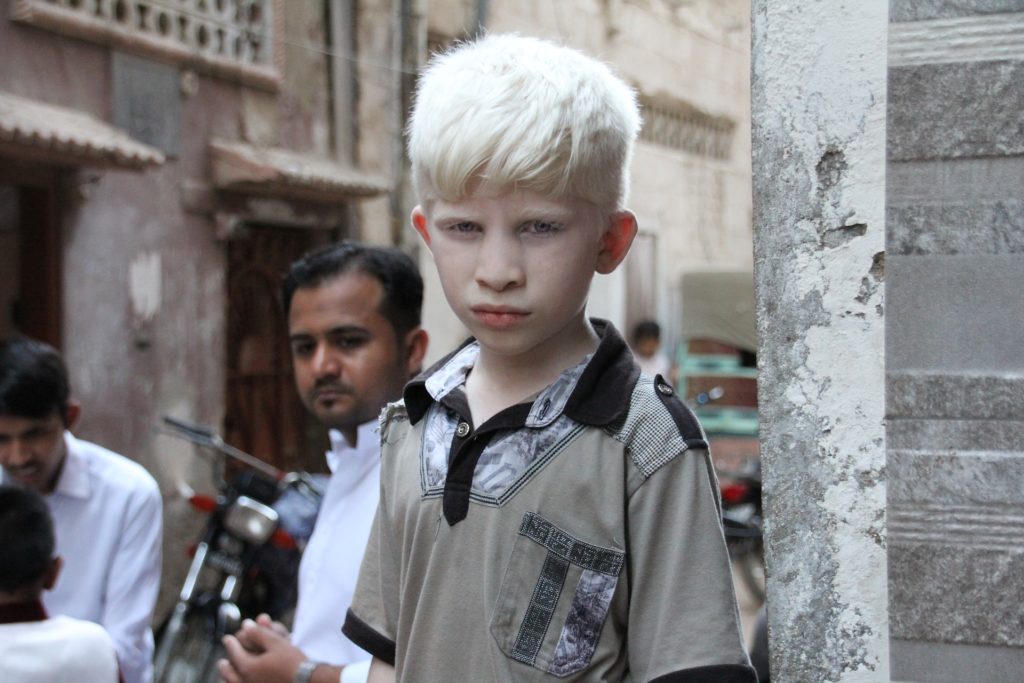
Even living among Caucasians, people with albinism look different and will sometimes be harassed or ridiculed for their pale looks. But imagine living in a black community, where myths actually make your appearance lethal.
Albinism is an inherited genetic condition that reduces the amount of melanin pigment formed in the skin, hair or eyes.
This means that a person is unable to produce normal colouring and their skin is light or pale, with freckles, whilst their body hair can vary from white to yellow or light brown. They may also have sensitive eyes or be visually impaired.
The myths that blood from a person with albinism can give you eternal life, or that sex with them can heal HIV/Aids are just a few of the reasons people with albinism are in harm’s way.
A life threatening condition
For Olivia Muhehe, 14, like most people with albinism in Malawi, her life is always in danger. She almost gave up on school. Most of her classmates discriminated against her and bullied her on grounds that she was different. It made her feel more vulnerable than ever.
“Those who were most extreme went as far as throwing stones at me,” says the Standard Six pupil at Goliati Primary School of Thyolo. “The thought of going to school started waning because of the experiences I always had to go through.” Stories are rife in the southern region of Malawi of ritual killings of albinos. The President of the Republic of Malawi His Ex. Arthur Peter Mutharika and other high-ranking personalities have intervened with a media call asking people to protect the people with albinism.
Fighting the stigma
The teachers who have been trained at the teacher training colleges run by Development Aid from People to People Malawi (DAPP Malawi) have brought strength in promoting inclusive education in the various schools in the Southern Region where they work. Now, Olivia Muhehe can afford a smile. She is now free and happy to interact with others without fear of stigma or discrimination. Olivia agrees that for her to get to her dream job – which is to become a nurse – the future belong to inclusive learning and acceptance which is crucial in creating an enabling environment especially in education.

According to the National Organization of Albinism and Hypopigmentation (NOAH), one in every 17,000 people in the U.S. has some type of albinism, but the incidence is much higher in East Africa (about 1 in 3000, according to some estimates).
INTERNATIONAL VOLUNTEER OPPORTUNITIES
TOGETHER WE CAN CHANGE THE WORLD
Lindersvold is an international learning center that facilitates courses in community development and certification in non-traditional pedagogy. Our Center provides an opportunity to learn about the big issues of our time while preparing to assist community-driven projects in Zambia, Malawi or Mozambique. We believe in combining hands-on training with theoretical knowledge, alongside community living, gives students the best foundation for working with sustainable development and vulnerable youth.

Living Within the Limits of Our Planet
Gaia from the July Team led a course exploring the 9 Planetary Boundaries, the limits within which humanity can safely live on Earth. The course looked at how human activities are changing our planet and what can happen when we push these limits too far. The course...
Community Resilience Explained: Foundations, Factors, and Practical Guidance
Discover what community resilience means, why it matters, the essential components, inspiring real-world examples, and actionable ways to strengthen resilience
Youth as Changemakers in Global Development: What Real Participation Looks Like
Explore how youth are driving global development, what authentic youth participation looks like, the barriers they face, and practical ways to support