
Corinne reflects on her experience

Corinne reflects on her experience
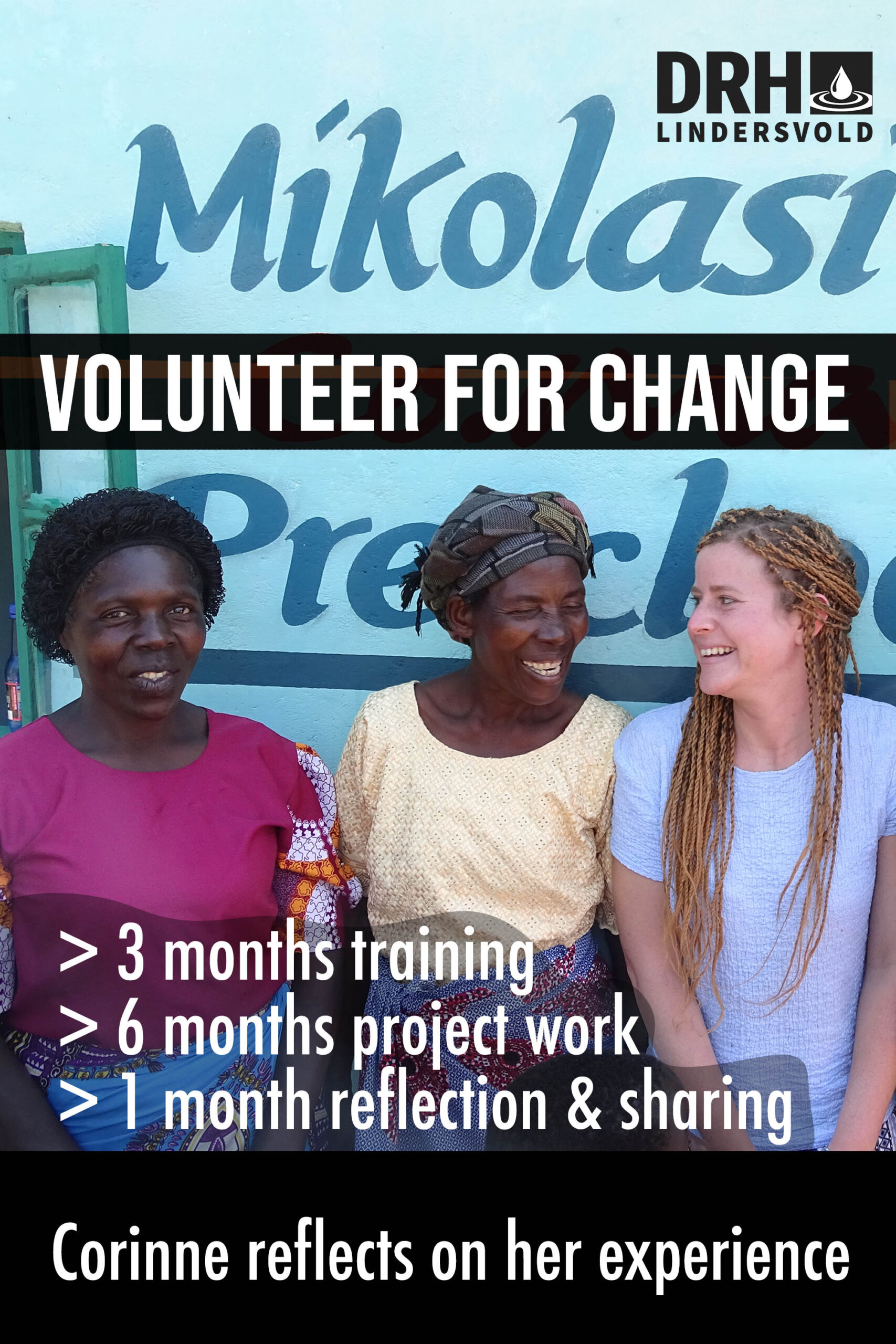
Corinne from Italy participated in the first Volunteer for Change programme and spent three months training at DRH Lindersvold before going to Malawi to work with DAPP Malawi for six months. In this article, she shares some considerations and reflections on the whole experience.
I’ve always been fascinated by the meeting of different cultures, by the similarities we can find in places so far away from our own homeland, and by the immense power that is unleashed when people with different backgrounds, but with a shared goal, meet. This curiosity about the world has pulled me all my life, it also brought me to study intercross communication at the university.

Looking for deeper knowledge and authentic experiences
Having finalised my degree, I wanted to experience this connection with the whole world that I have felt all my life – reading about it in books was not enough anymore. At the same time, I didn’t want to be “just a tourist”. I wanted to understand how people live in realities other than mine, trying to experience it through their eyes and not with my own parameters. To have the experience I was looking for, there were some conditions:
Firstly, I wanted to have a bigger overall view of the world’s condition and of the place where I would go – I had to study more, discover more, and understand more.
Secondly, I wanted to immerse myself in a local community. In my opinion, this is the only way to truly experience another society and really understand it.
Thirdly, I wanted to feel that what I was doing was for a reason bigger than me, let’s say with a greater purpose other than my personal development.
Then I read about this programme. It had the combination of studies and practice that I was searching for, and it had a period of development work with rural communities somewhere in the Global South. I finally had the chance to satisfy my curiosity and to work for a meaningful reason – exactly what I was looking for.

Working with pre-school teachers in Malawi
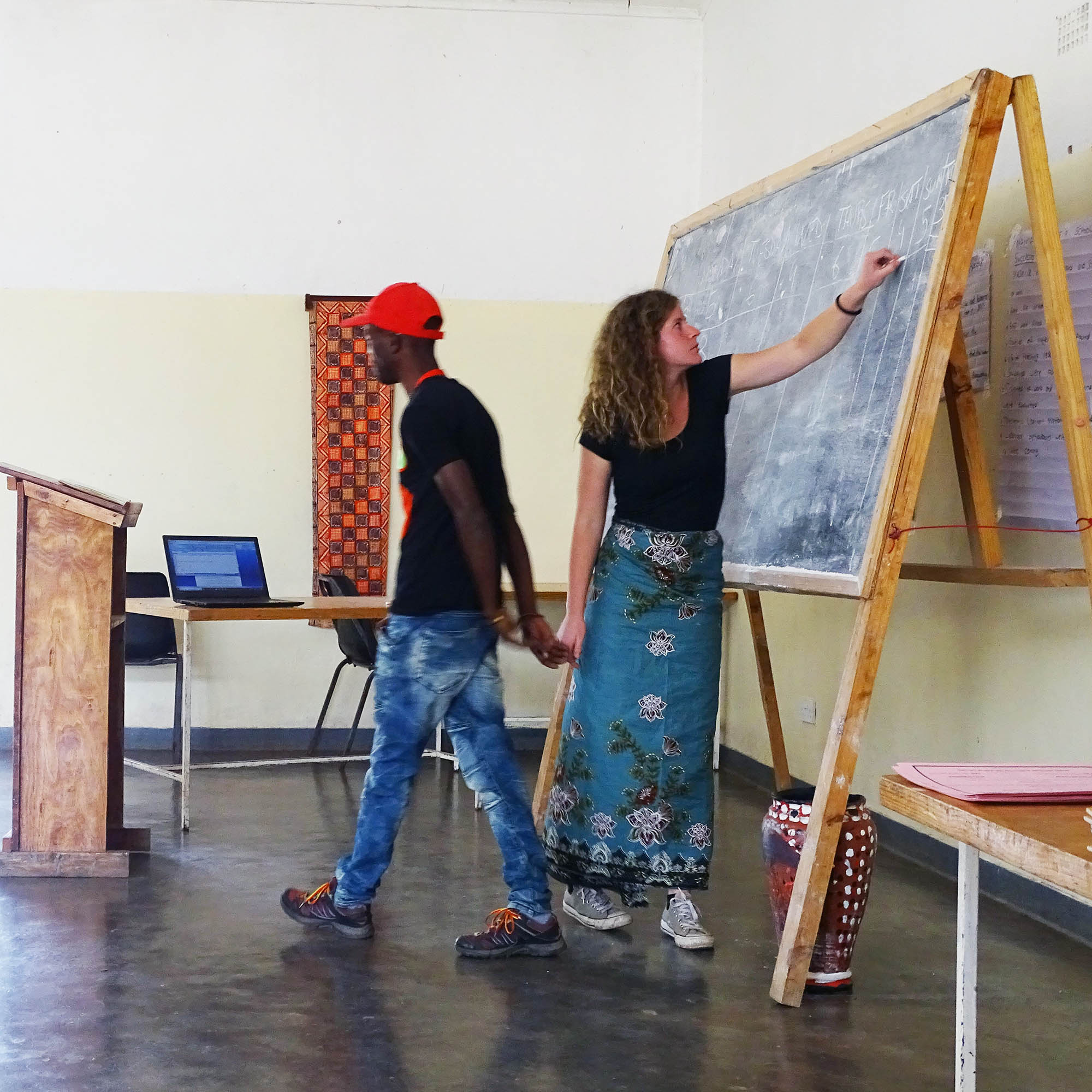
During my six months in Malawi, I worked in the pre-school sector in the rural area in the south of the country. I did not work directly with the children, even though I had daily contact with them. I worked with their teachers, and my role was to assist them by carrying out projects that they were not able to get done themselves during their busy workdays with the children.
With my teammate and under the supervision of our project leader, we could choose which tasks and projects to focus on, based on our abilities, ideas, and knowledge. We decided to concentrate our efforts on three areas: construction of buildings, workshops to widen the teachers’ knowledge in different areas, and economical sustainability projects.
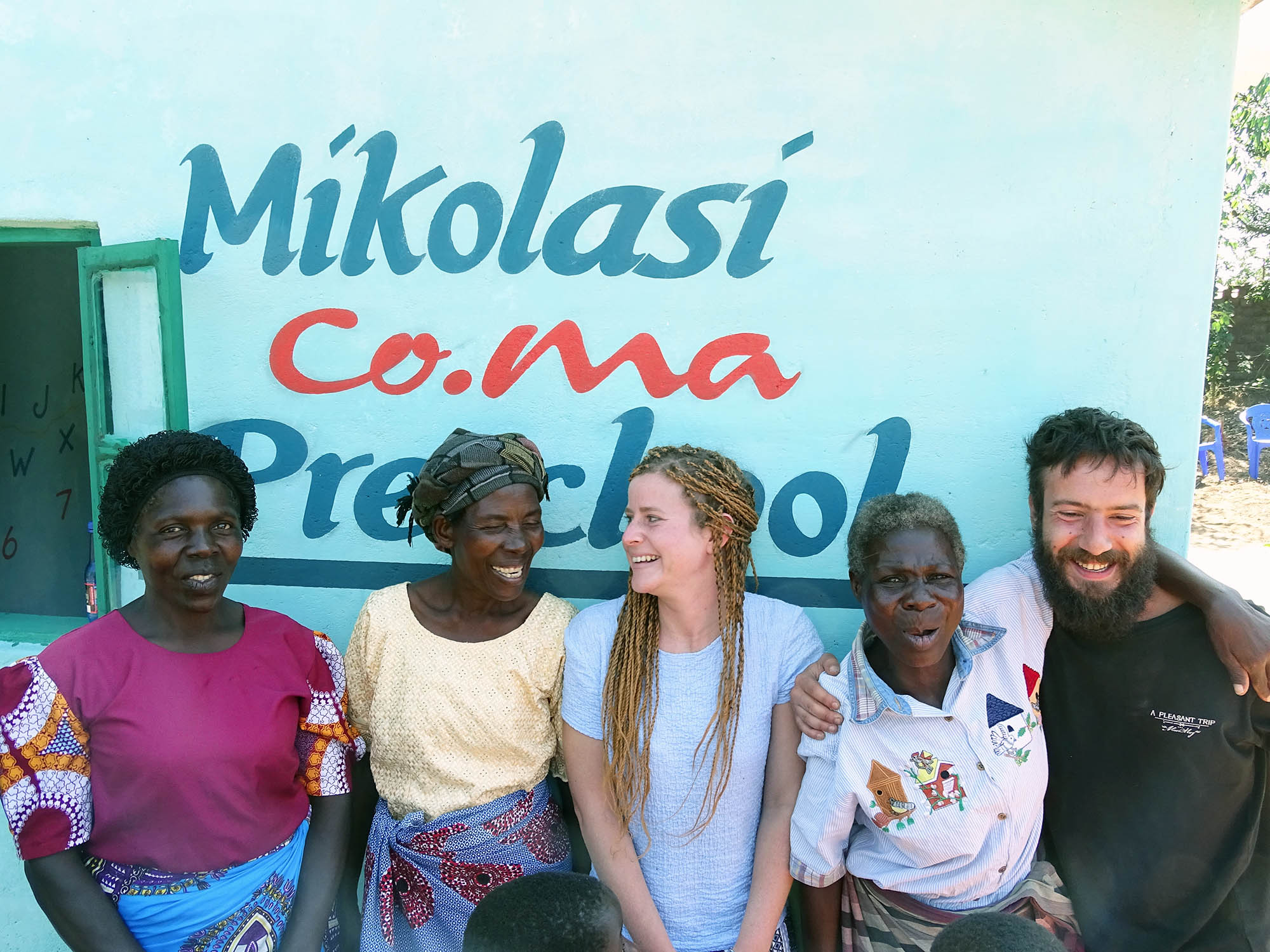
In our first project, we worked with three communities to build classrooms for the pre-schools, through fundraising, organisational tasks and being part of the actual manual work.
Then we created a livestock and garden farming project based on the permaculture system and chicken breeding for six pre-schools. This project started to make these schools economically independent with the sale of the eggs but also to guarantee a daily meal for the children with produce harvested in the garden.
Workshops, networking and sharing experiences
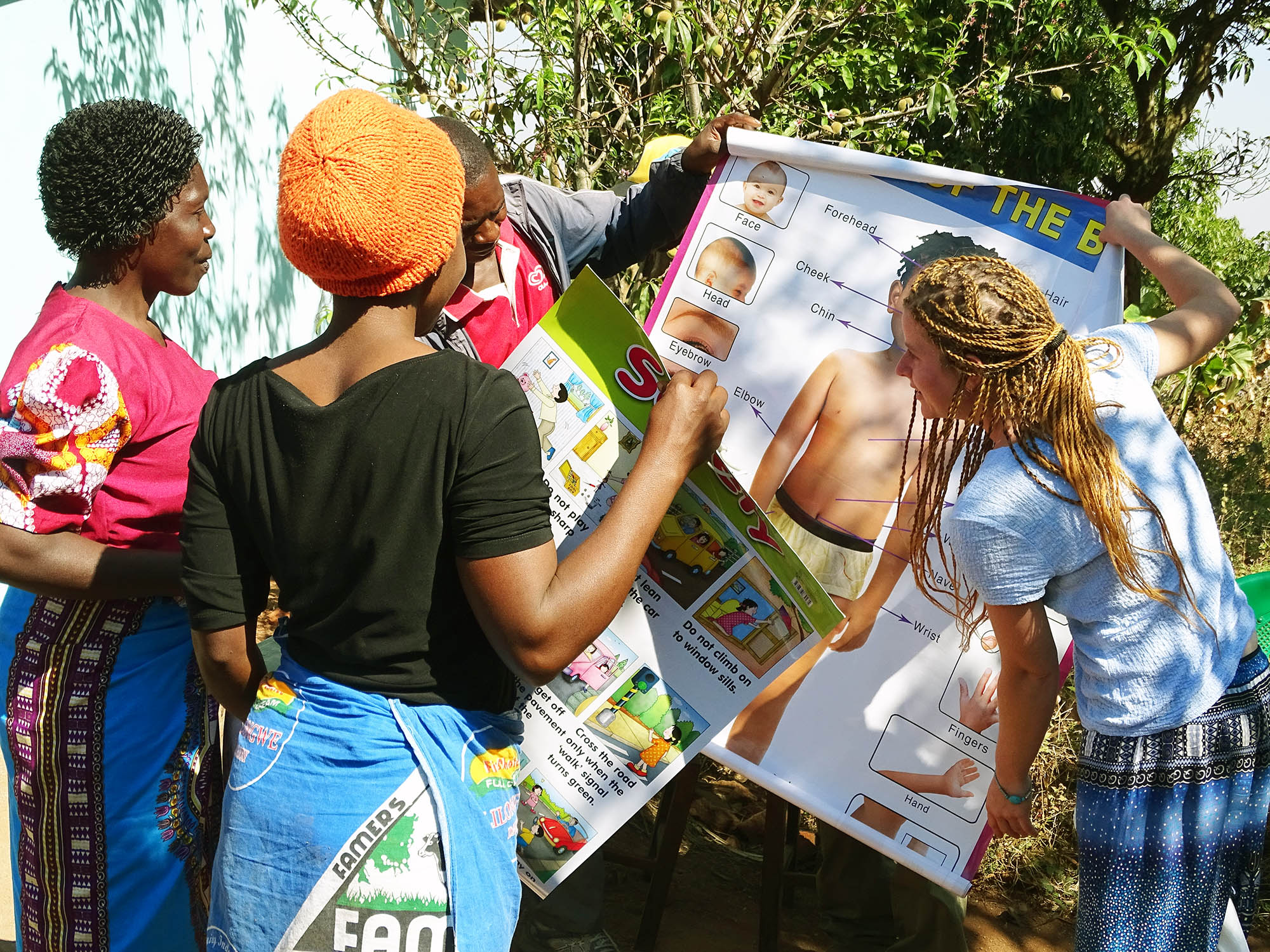
The last area we worked with is the spread of knowledge. We held various workshops on different topics, for all the teachers working in the rural area where we were active: the construction of musical instruments with makeshift materials, how to make recycling paper, different teaching methods, economy lessons to organise the livestock project, how to have permaculture gardens and cooking lessons.
One of our intentions with these workshops was to create a network between the several communities and with local people to share their knowledge without the intervention of foreigners – for this, we invited local experts when needed and during the workshops was planned time for the participants to share their skills, for example, the cooking lessons.
In addition to our work within the pre-school sector, we organised two days in cooperation with high schools. One of the days was about the prevention of sexual diseases, the other day focused on the concept of an “open future” and on how education, both technical and academic, is a useful tool to pursue a career in different fields. For this last event, our main task was to contact local people who had successfully pursued their career goals. It was these professionals who talked about their experiences with the high school students and gave good advice on training and other career possibilities.
What are the main take-aways from the whole experience?
I’ve changed so much with this program that trying to enclose everything in a few lines is hard to do.
This experience has helped me to open my vision of the world – I already knew we are living in an elaborate world full of injustice and inequality, but I didn’t have enough knowledge to understand the complexity of the causes. During the study period, I had the chance to lift the veil of Maya that covers our western society and look behind it, to discover our responsibilities and how the system is preserving this world imbalance.
During the project abroad I could touch and feel on my skin the existing dualism and contraposition between the life I had and the reality of the bigger part of the world.
But my critical thinking is not the only skill I developed; I also had the chance to improve my soft skills.
Teamwork and soft skills
My teamwork capability is something that I had to constantly reinforce – learn how to cooperate to reach a common goal, how to be patient when conflicts arose, and find a compromise between being a part of the team and taking the lead when necessary. Flexibility was a must.
I improved my organisational skills. Within this programme, you are the main one responsible for your studies and even during the project period. If you want to see some tangible results you need to plan what you want to achieve and be stubborn until you find the way to do it.
Last but not least, the international environment of the whole programme contributes a lot to several aspects of my development. My linguistic skills are on top of them. I started to actually speak English and I improved my Spanish, because some of my teammates were Spanish. Danish is a very hard language for Italian speakers! I gained a new understanding and insights into different cultures, and enjoyed our similarities and differences, enriching the whole experience.

I’ve always been fascinated by the meeting of different cultures, by the similarities we can find in places so far away from our own homeland, and by the immense power that is unleashed when people with different backgrounds, but with a shared goal, meet.
What was the biggest challenge for you?
Being who I am, the hardest part which pushed me out of my comfort zone was forming relationships with other people. Being an active part of the community life, finding the courage to speak up when needed, and being comfortable enough with myself to be comfortable with a group of people that I didn’t know was the biggest challenge I had to face. But it’s true that, after the first effort, this is what I enjoyed the most.
What is Volunteer for Change
The Volunteer for Change programme is based on two concepts: Sustainable development and international solidarity.
The programme lasts ten months and is an opportunity to learn about the big issues of our time – and to do something about them in practical terms.
The Volunteer for Change programme provides an opportunity for people from the Global North to learn from, and volunteer with, community-driven development programmes in the Global South run by members of Humana People to People. These projects respond to challenges within the spheres of community development, education, sustainable farming, early childhood development and mitigation of the climate crisis.
The fast-paced and action-based Volunteer for Change programme takes ten months:
3 months of training and preparation in Denmark
6 months of assisting a sustainable development programme at a Humana People to people project in the Global South
1 month of reflection, evaluation, and sharing of experiences.
DRH Lindersvold – The Travelling School for Change – welcomes everyone who is interested in working together with us to address humanitarian and development challenges worldwide.
Let’s create a better world together.
Would you like to know more?

MORE FROM OUR BLOG
MORE FROM OUR BLOG
The Power of Community
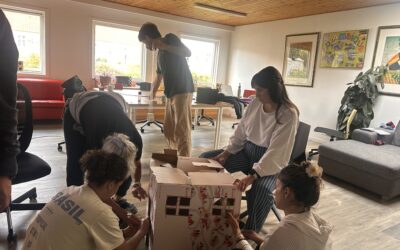
At our school, students have different courses and activities that give them the opportunity to be themselves, express their ideas, discover their strengths and learn how to work together as a team. For this activity, our topic was “The Power of Community.” We...
30 Years of Humana Berlin, One Day of Learning
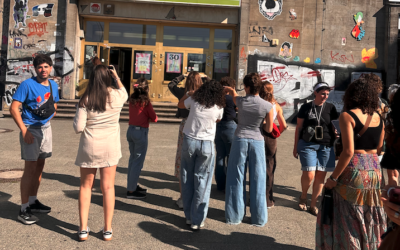
During their trip to Berlin, the July Team had the opportunity to visit one of the biggest Humana shops in Europe and learn more about the work behind the organisation. The visit was especially meaningful as Humana is celebrating its 30th anniversary. ‹›...
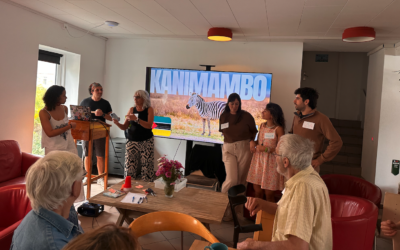
More Than an Exam
An exam does not always have to mean sitting quietly with a paper and a pen. For their first People’s Exam, the July Team had a different challenge: show what they had learnt and find a creative way to share it with others. The topic was People and Politics. Turning...
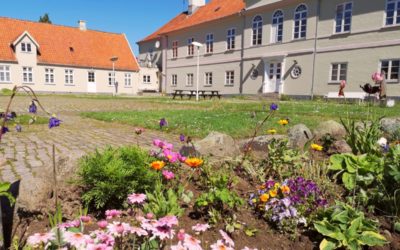
A Practical Guide to Folk High Schools in Denmark: English-Language Programmes, Life, and Application
Explore English-language folk high schools in Denmark, their philosophy, application steps, and daily life for international students
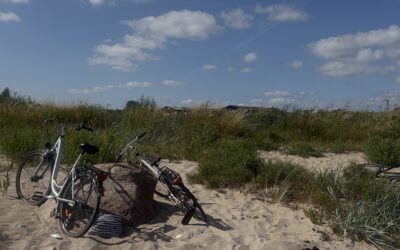
Life Beyond the School🌞
See what life beyond the school looks like at Lindersvold, from fjord swims and beach days to friendships, shared adventures and time together.
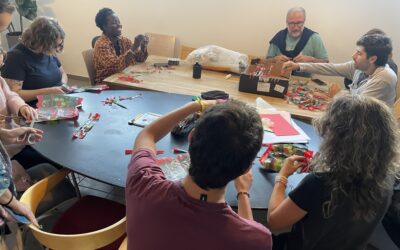
Turning Waste into Celebration
Most people would look at an empty plastic bag and see rubbish. The July Team saw something else. As Cultural Evening approached, the volunteers gathered around a table covered with plastic packaging, cardboard boxes, scissors and tape. Nothing about it looked...