Workaway vs Volunteer Programs: How to Choose the Right Path for Meaningful Travel
Choosing between Workaway and traditional volunteer programs can feel overwhelming when planning meaningful travel.
This guide will help you understand how these two options differ, what each can offer, and where their challenges lie. By the end, you’ll be able to match your expectations and goals to the right type of experience.
You’ll learn the core differences in structure, cost, and impact between Workaway and volunteer programs. You’ll also get practical advice for making your decision and preparing for a rewarding journey.
Key Takeaways
- Workaway offers informal, flexible exchanges focused on cultural immersion and skill-sharing, often with minimal costs.
- Structured volunteer programmes often add training, defined project roles, team support, and fixed dates, although fees and inclusions vary widely.
- Workaway is ideal for independent travellers seeking short-term opportunities and direct contact with hosts.
- Structured programmes may suit people who want a clearer project framework, team support, community living, and a longer commitment.
- Consider your goals, budget, desired level of support, and preferred environment before deciding.
- Preparation, clear communication, and realistic expectations are essential for a positive experience in either path.
- Our Volunteer for Change Programme is one structured example: three months of training in Denmark, six months with community projects abroad, and one month of evaluation and information work.
Want More Structure Than Workaway?
If you already know you want training, a team around you, and a longer-term community project, our 10-month Volunteer for Change Programme may be closer to what you have in mind. Explore how it works now, or keep reading for a balanced comparison first.
Understanding the Basics: What Are Workaway and Volunteer Programs?
Before comparing Workaway and volunteer programs, it’s important to clarify what each actually involves. Both options offer ways to travel with purpose, but they operate under different models and expectations.
Workaway is a platform that connects travellers directly with hosts around the world for cultural exchange and practical help. Workaway says a typical arrangement is around 4–5 hours of help per day, five days a week, usually in exchange for food and accommodation, although the exact conditions vary by host. Tasks can include gardening, animal care, language practice, house projects, hospitality, or creative work.
Volunteer programs, on the other hand, are typically run by organisations or charities. These programs often have a defined structure, set goals, and a clear mission. Volunteers are placed in projects that address social, environmental, or community needs, such as education, healthcare, construction, or conservation.
Many volunteer programs include training, ongoing support, and a group environment.
While both Workaway and volunteer programs involve exchanging your time and effort for benefits beyond a salary, the expectations, level of organisation, and outcomes can be quite different. Recognising these distinctions is the first step towards choosing the right path for your own journey.
Comparing Structure, Commitment, and Costs: The Key Differences
The practical differences between Workaway and volunteer programs shape the kind of experience you’ll have. Understanding these contrasts will help you decide which option aligns with your needs and expectations.
Let’s break down the main areas of difference: structure, commitment, costs, support, and the nature of the work.
- Structure: Workaway is informal and host-driven, while volunteer programs are structured and organisation-led.
- Commitment: Workaway placements are often short-term and flexible; volunteer programs may require longer commitments and pre-set dates.
- Costs: Workaway uses an annual membership model, while structured volunteer programmes may charge programme fees that cover training, accommodation, staff, logistics, or project support. Always compare what is actually included rather than the headline price alone.
- Support: Workaway arrangements are primarily agreed directly with the host, but the platform also provides profile review, feedback tools, 24/7 human support, and Emergency Help in qualifying situations. Structured programmes may add on-site coordinators, training, group support, and a defined project framework.
- Nature of Work: Workaway tasks are usually practical and varied; volunteer programs focus on community impact, education, or development.
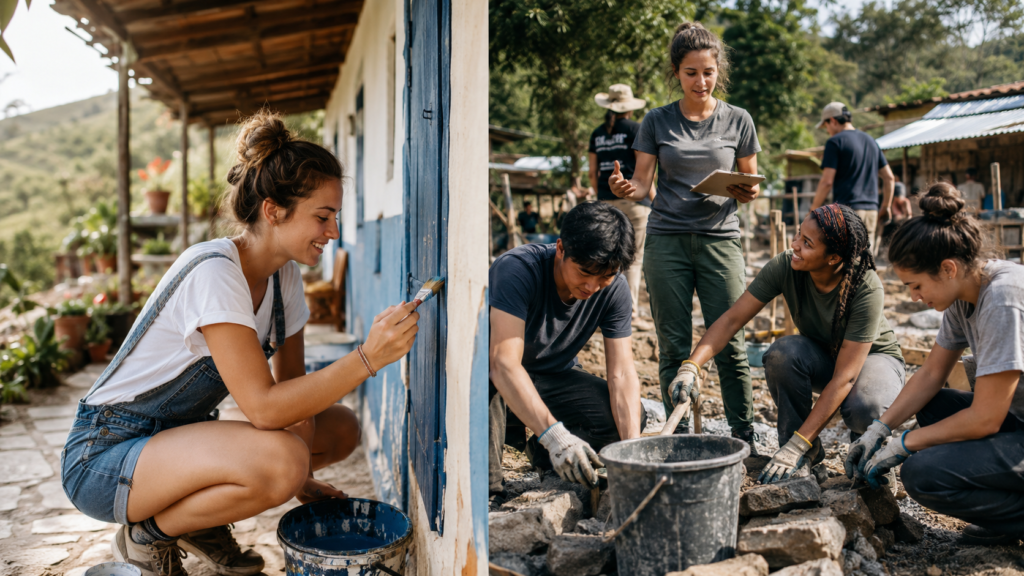
For example, a Workaway host might ask you to help with gardening or painting in exchange for a private room and home-cooked meals. You arrange details directly with the host and can often negotiate your schedule. In contrast, a volunteer program might place you in a team building a school, with a set daily routine, group accommodation, and a project leader overseeing the work.
Costs are a major point of divergence. At the time of writing, Workaway’s official signup page lists a one-year membership from US$69 for a solo traveller and US$79 for two people. Accommodation and food are commonly part of the exchange, but travel, insurance, visas, local transport, and personal spending may still be your responsibility depending on the host and destination.
Structured volunteer programme fees vary considerably, so compare them by inclusions: training, accommodation, meals, project costs, staff support, insurance, transport, flights, visas, and what you must still pay separately.
Support and safety are also handled differently. Workaway provides platform-level safeguards and support, but it is not the same as having a programme coordinator with you throughout a placement. In a structured programme, the organisation may take more responsibility for preparation, logistics, emergency procedures, and day-to-day project support. In either model, you should still check the specific arrangements before committing.
The outcomes and impact of each path can vary. Workaway is often about cultural exchange and learning new skills, while volunteer programs may focus more on sustainable development and measurable community benefit. Your choice will depend on whether you prioritise flexibility and immersion or structure and impact.
What to Expect from Workaway: Flexibility, Culture, and Independence
Workaway appeals to many travellers because of its flexibility and the chance to live like a local. The platform’s informal structure allows you to choose hosts and locations that match your interests and schedule.
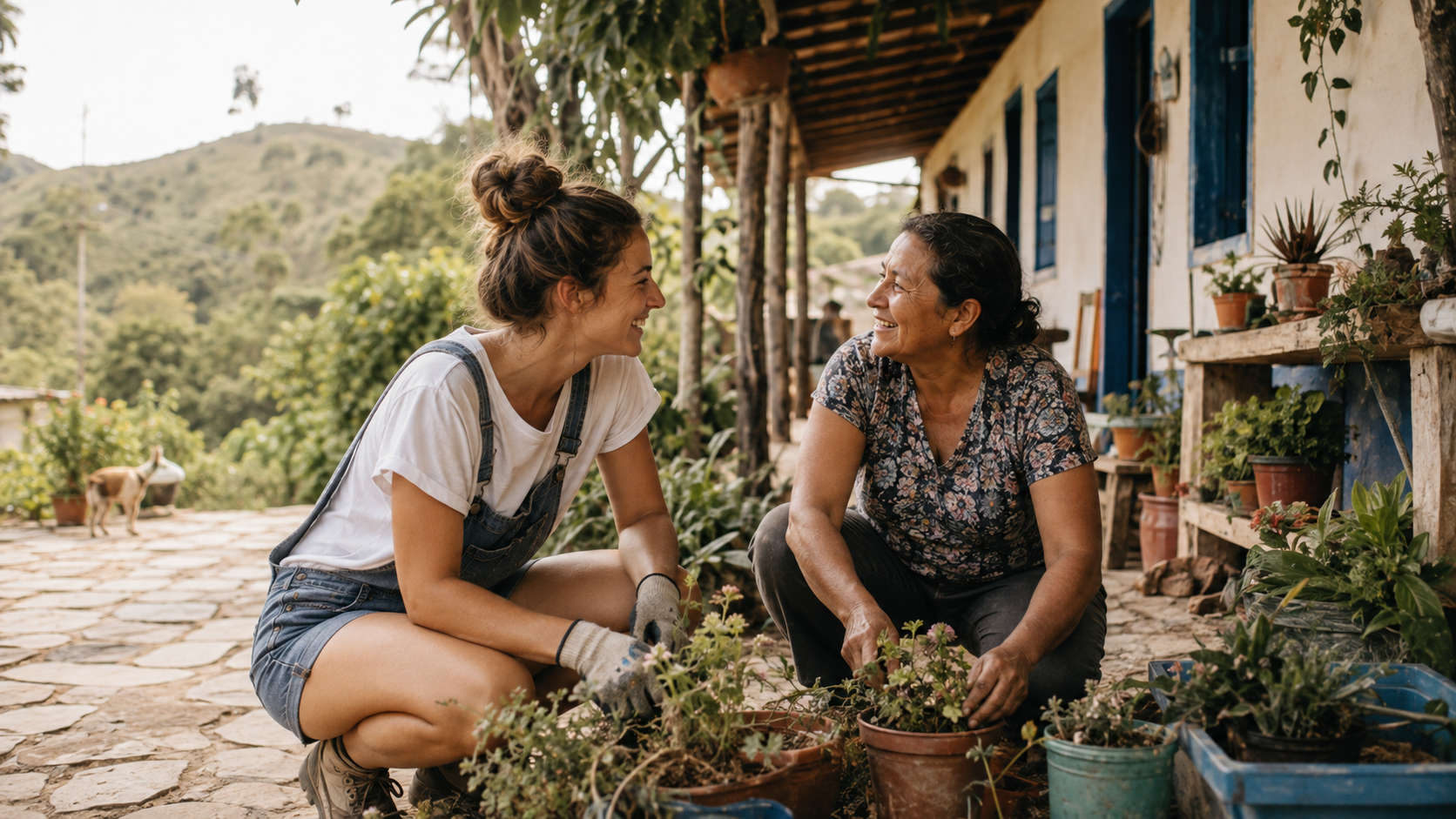
A key benefit is the opportunity for cultural exchange. Living with a host family or in a small team, you can learn new languages, try local foods, and experience daily life in a different country. The work itself is often hands-on and practical, such as helping on a farm, renovating a guesthouse, or supporting a family business.
Workaway is also budget-friendly. After paying the annual membership, you can arrange as many placements as you like, usually without extra fees. This makes it popular with long-term travellers, gap year students, and those seeking affordable ways to see the world.
However, the informality of Workaway comes with challenges. Placements are host-specific, so the quality of the experience can vary and the reality may not always match your expectations. Clear conversations about hours, tasks, meals, accommodation, days off, and boundaries are important before you arrive.
Workaway does provide platform-level safety measures, including manually reviewed profiles, feedback, 24/7 human support, and Emergency Help in certain qualifying situations. That is useful, but it is different from having an on-site project coordinator responsible for your placement.
Workaway is therefore best suited to travellers who are comfortable taking more responsibility for choosing a host, checking visa and insurance requirements, managing local logistics, and changing plans if a placement is not right for them.
The Value and Structure of Traditional Volunteer Programs
Traditional volunteer programs offer a more structured and supportive environment than Workaway. They are designed for people who want to contribute to a cause, develop new skills, and often work as part of a team.
One of the main advantages is the level of preparation and guidance. Our Volunteer for Change Programme, for example, is designed as a 10-month journey: three months of volunteer training in Denmark, six months working with established community projects abroad, and one month back in Denmark for evaluation and information work. That is a very different proposition from arranging a series of independent host exchanges.
Volunteer programs are also more likely to have established partnerships with local communities or organisations. This can increase the sustainability and impact of your work, as projects are often designed to address real needs and continue after you leave.
The cost model is also different. We currently charge a €3,650 fee for the Denmark-based training and final evaluation period, including food, accommodation, materials, tuition, programme transport, and a full-time teacher. Our partner, Humana People to People, provides a travel grant for the project period covering food and accommodation, flights to the project, travel insurance, visas, and required vaccinations. Travel to Denmark, pocket money, and personal items are not included, so those still need to be budgeted for.
A potential drawback is the reduced flexibility. Volunteer programs usually have fixed start and end dates, set daily routines, and clear expectations. This can be ideal for those seeking structure, but less appealing if you want to travel spontaneously or change plans at short notice.
For people who want a defined learning journey, team structure, and longer-term project commitment, a formal programme can be a better fit than a host-by-host exchange. The important question is not whether one model is universally better, but which level of structure and responsibility matches the experience you actually want.
See How Volunteer for Change Is Structured
If the structured side of this comparison sounds closer to what you want, look at the full 10-month Volunteer for Change journey, what the fee covers, and how the six-month community project period works before deciding.

Making Your Choice: Matching Your Goals and Circumstances
Deciding between Workaway and a volunteer program depends on your personal goals, resources, and comfort level. There is no one-size-fits-all answer, but a few key questions can help clarify your decision.
- What is your main motivation? If you want cultural immersion, skill-sharing, and informal travel, Workaway may be ideal. If you seek structured impact, training, and community, a volunteer program could be better.
- How much support do you need? Independent travellers comfortable with uncertainty may thrive on Workaway. Those who prefer guidance, safety nets, and group living may feel more secure in a formal program.
- What is your budget? Workaway has a relatively low membership cost, but you still need to budget for travel, insurance, visas, local transport, and personal expenses. Structured programmes can cost more upfront, so compare exactly what the fee and any partner funding include.
- How flexible is your schedule? Workaway offers short-term, flexible placements. Volunteer programs typically require longer commitments and fixed dates.
- What kind of contribution do you want to make? Workaway is primarily a cultural-exchange platform, although some hosts are NGOs or community projects. Structured volunteer programmes are more likely to place you within an organisation with defined project goals, training, and longer-term partnerships.
It can help to write down your priorities and rank them. For example, if safety and support are top concerns, a structured volunteer program may be the right fit. If you value autonomy and variety, Workaway could be more rewarding.
One example of how this can work in practice is our Volunteer for Change Programme. It combines training, group living, and international placements, offering a supportive environment for people who want more preparation and a longer-term project commitment. Comparing this with a typical Workaway experience can clarify what you want from your journey.
Ultimately, the best choice is the one that aligns with your values, needs, and circumstances. Take time to research, ask questions, and reflect on what you hope to gain from your experience.

Practical Tips for a Positive and Safe Volunteering Experience
Whether you choose Workaway or a traditional volunteer program, preparation and mindset are key to a rewarding experience. The following tips will help you make the most of your journey and avoid common pitfalls.
- Research thoroughly: Read reviews, ask questions, and understand what’s expected before committing.
- Communicate clearly: Set expectations with your host or coordinator regarding work hours, accommodation, and boundaries.
- Be realistic: Understand that not every day will be exciting or easy. Flexibility and patience are essential.
- Pack appropriately: Bring essentials for your destination, including work clothes, personal items, and any required documents.
- Stay open-minded: Embrace cultural differences and be willing to learn from others.
- Prioritise safety: Share your plans with friends or family, have emergency contacts, and know your rights.
- Reflect and adapt: Take time to process your experiences and adjust your approach if needed.
If you want to see what this looks like across a longer volunteering journey, our Volunteer for Change Programme includes orientation, group support, and ongoing reflection. These elements can make a significant difference, especially for first-time volunteers or those travelling abroad.
No matter which path you choose, approaching your experience with curiosity, respect, and a willingness to contribute will help you build meaningful connections and lasting memories.
Conclusion
Choosing between Workaway and traditional volunteer programs is a personal decision shaped by your goals, resources, and comfort with structure or independence. Both paths offer unique opportunities for growth, learning, and contribution. By understanding the differences, weighing your priorities, and preparing thoughtfully, you can embark on a journey that is both rewarding and meaningful.
Is Volunteer for Change the Better Fit for You?
If you want more structure than a host-by-host exchange, compare your priorities with our 10-month Volunteer for Change Programme: three months of preparation, six months with community projects abroad, and a final month of evaluation and information work.
FAQ
Is Workaway considered volunteering?
Workaway is a form of volunteering, but it is less formal than traditional volunteer programs. It focuses on cultural exchange and practical help in exchange for accommodation, rather than structured community projects with defined impact goals.
Do I need special skills for Workaway or volunteer programs?
Most Workaway hosts do not require special skills, just a willingness to help and learn. Some volunteer programs may require specific experience or qualifications, especially for roles in education, healthcare, or technical projects.
Are Workaway and volunteer programs safe?
Both can be safe if you take precautions. Workaway requires more personal responsibility, as you arrange details directly with hosts. Volunteer programs often provide more support, training, and emergency contacts, which can enhance safety.
Why do volunteer programs charge fees?
Volunteer program fees cover project costs, staff salaries, training, accommodation, food, and sometimes insurance or excursions. These fees help ensure the sustainability and impact of the projects and provide support for volunteers.
Can I combine Workaway and a volunteer program in one trip?
Yes, many travellers combine both. For example, you might start with a structured volunteer program to gain experience and confidence, then use Workaway for more flexible travel and cultural exchange.