
Together, let’s act now!

Together, let’s act now!

For the future of our planet, we must act together, and we must act now. This is not a time to stand alone. It is a time to stand together, in solidarity with one another. Through hard-earned experience, we have realised that we succumb to the pressures of our circumstances if we insist on standing alone. We have understood that by standing together, we can stay strong and create positive change.
Together, act now
On International Volunteer Day we celebrate people everywhere who act together with others, for people and for our planet. Volunteers come in many shapes and sizes but have the common trait that they put their humanity into practice and extend their solidarity through selfless volunteering.
Solidarity with the most affected people
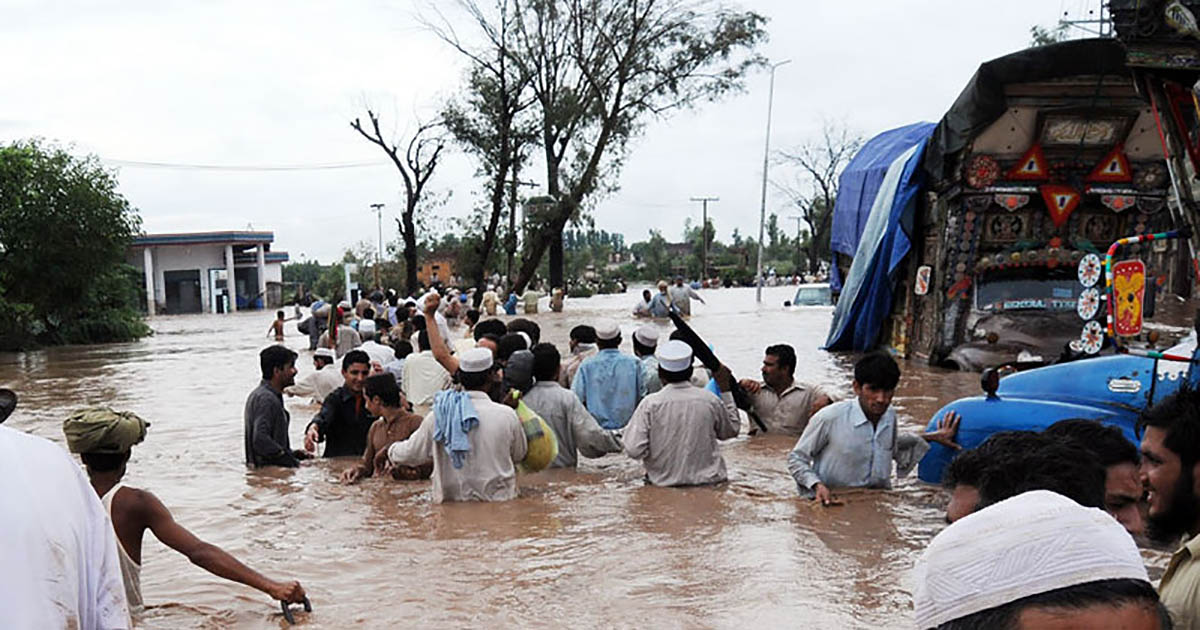
We face the greatest crisis in human history and that of the planet, namely the triple whammy of the climate emergency, the biodiversity crisis, and poisoning by pollution. It is a manmade catastrophe that threatens life as we know it.
We are also acutely aware that the people who have contributed the least to the climate crisis are the ones who will suffer the most from its consequences, namely rural communities in the global south. The most affected peoples and areas also managed to make their voices heard at the COP 27 meeting in Egypt, and for the first time ever, a fund to compensate crisis-struck countries for “loss and damages” was agreed upon.
However, while we wait for these funds to materialise, people suffer. There has never been a better time to join the ranks of people who take action now, to move towards social and climate justice. The floods and the droughts are real. The climate already changed. People urgently need access to basic human rights such as quality education, health care, and food security through climate-smart agriculture – just to mention a few.
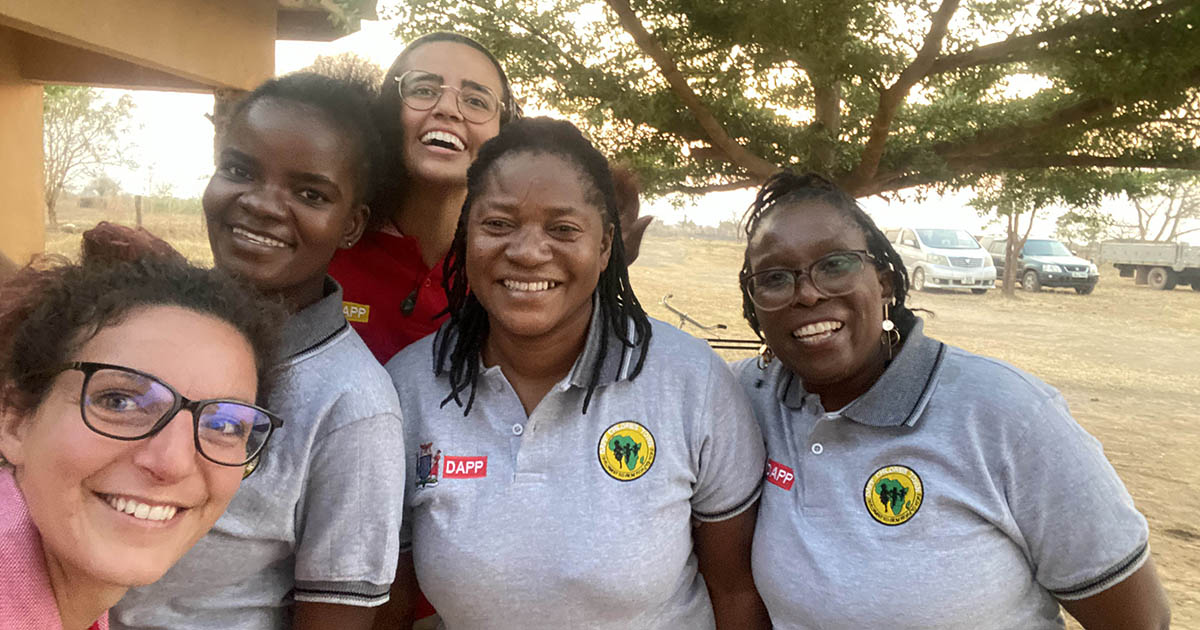
Our project partners, national NGOs under the Humana People to People umbrella, run development programmes based on the needs of marginalised communities. Thousands of local volunteers join the professional staff to carry out the programmes, and the good news is that international volunteers are welcome, too.

The role of an international volunteer
As an international volunteer at a Humana People to People project is to act into the framework of the project activities with an attitude of solidarity towards the people in the communities, the project leaders, and their partners. You will contribute with your heart, mind, and hands ready for action. With time and togetherness, you, and the people you join at the project will bring about positive change
As a volunteer with Humana People to People, you join a movement. The projects have long-term aims and are community-led. Sustainability is key when we talk about development programmes. All projects must end eventually, but the impact of the project should be substantial, positive, equitable and long-lived, meaning that the communities will be empowered to carry the new practices forward long into the future.

As an international volunteer, you can contribute with your skills and ideas to the project, without taking away agency from the people who are at the core of it. Your skills and time are supporting the aims of the long-term project for a limited time, but in that time, you can contribute with elements that add something extra to the project.
Transnational exchanges
Responsible international volunteerism offers an opportunity to learn about different cultures in a hands-on manner. Most likely it will help shatter any stereotypical beliefs you might have and bring a deeper intercultural understanding and respect.
Volunteering, implemented on a basis of solidarity, brings people together, regardless of whether the exchange is domestic or international.

Green skills are needed to mitigate the climate crisis. Humana People to People’s Technical and Vocational Education and Training programmes play a key role in preparing the young generation for emerging green jobs and providing them with the right skills and capabilities.

Building wood saving stoves
Building climate resilience must embrace the broader adaptation and development issues at household level. Climate change adaptation initiatives cannot achieve sustainable results without dealing with the fundamental root causes of poverty and vulnerability.

Women in the lead of Conservation Agriculture
Many rural populations depend on small-scale agriculture and natural resources for subsistence and family income. Spreading awareness about climate-resilient agriculture practices such as Conservation Agriculture, and promotion of drought-resilient crop varieties is one way that the Farmers’ Clubs support their members.
Women make up 60% of membership and leadership positions in all Humana People to People Farmers Clubs projects. The inclusion of women is crucial in achieving gender equality in climate response actions.
How can you contribute?
By participating in the 10-month Volunteer for Change programme run by DRH Lindersvold you can support the efforts of community-based projects in either Zambia, Mozambique, Malawi, or India (depending on the pandemic situation and other external factors beyond our control.)
Here, you and your team are hosted by an NGO under the Humana People to People umbrella. You are connected to a long-term community project to do with Health, Education, Agriculture, Community Development or Environment.
As volunteers, you contribute to these sustainable development programmes in different ways, depending on what is needed and with the overarching aim of learning from the communities and their situation in the global reality, while you contribute to the project with your skills and experience.
Apart from experiencing learning and working together in a “people to people” way, you strengthen your personal and social skills when you immerse yourself in a Malawian, Zambian or Indian community. You will probably learn more than you can imagine.
Read more about the programme here.

What is Volunteer for Change
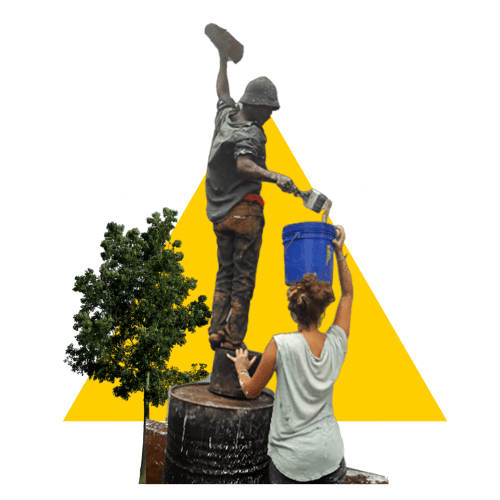
The Volunteer for Change programme is based on two concepts: Sustainable development and international solidarity.
The programme lasts ten months and is an opportunity to learn about the big issues of our time – and to do something about them in practical terms.
The Volunteer for Change programme provides an opportunity for people from the Global North to learn from, and volunteer with, community-driven development programmes in the Global South run by members of Humana People to People. These projects respond to challenges within the spheres of community development, education, sustainable farming, early childhood development and mitigation of the climate crisis.
The fast-paced and action-based Volunteer for Change programme takes ten months:
3 months of training and preparation in Denmark
6 months of assisting a sustainable development programme at a Humana People to people project in the Global South
1 month of reflection, evaluation, and sharing of experiences.
DRH Lindersvold – The Travelling School for Change – welcomes everyone who is interested in working together with us to address humanitarian and development challenges worldwide.
Let’s create a better world together.
Would you like to know more?

MORE FROM OUR BLOG
MORE FROM OUR BLOG
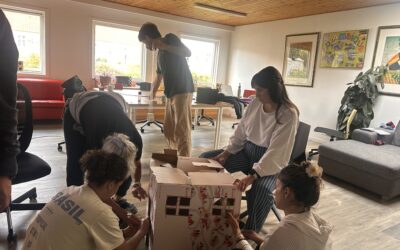
The Power of Community
At our school, students have different courses and activities that give them the opportunity to be themselves, express their ideas, discover their strengths and learn how to work together as a team. For this activity, our topic was “The Power of Community.” We...
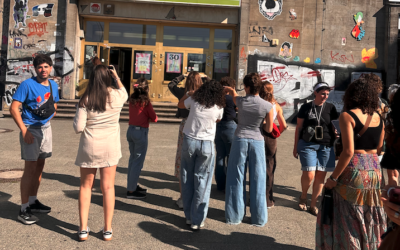
30 Years of Humana Berlin, One Day of Learning
During their trip to Berlin, the July Team had the opportunity to visit one of the biggest Humana shops in Europe and learn more about the work behind the organisation. The visit was especially meaningful as Humana is celebrating its 30th anniversary. ‹›...
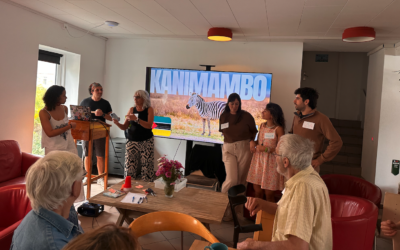
More Than an Exam
An exam does not always have to mean sitting quietly with a paper and a pen. For their first People’s Exam, the July Team had a different challenge: show what they had learnt and find a creative way to share it with others. The topic was People and Politics. Turning...
A Practical Guide to Folk High Schools in Denmark: English-Language Programmes, Life, and Application
Explore English-language folk high schools in Denmark, their philosophy, application steps, and daily life for international students
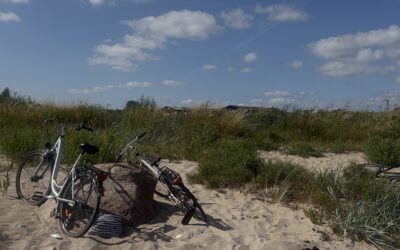
Life Beyond the School🌞
See what life beyond the school looks like at Lindersvold, from fjord swims and beach days to friendships, shared adventures and time together.
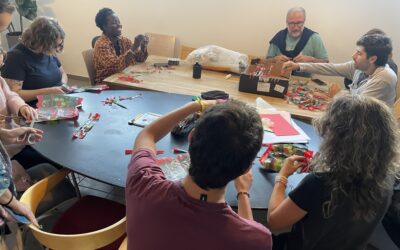
Turning Waste into Celebration
Most people would look at an empty plastic bag and see rubbish. The July Team saw something else. As Cultural Evening approached, the volunteers gathered around a table covered with plastic packaging, cardboard boxes, scissors and tape. Nothing about it looked...